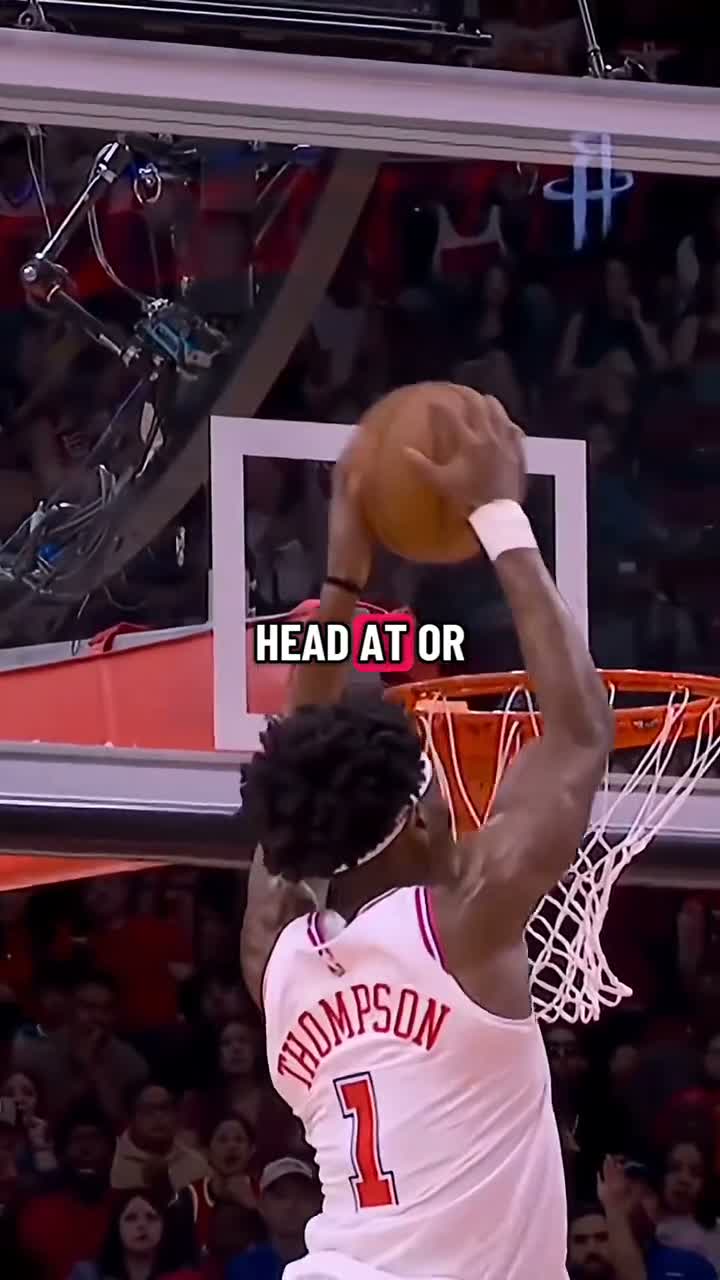
Amen Thompson is one of the hardest players in this series to put a number on. He has the speed and lift to make almost any dunk look easy, but I have not found the kind of clean head-at-the-rim clip that would settle his maximum. My estimate in the source video is about 40 to 42 inches. That is a cautious footage estimate, not a verdict on how athletic Amen is.
Where the 40-inch starting point comes from
At six-foot-seven without shoes in the video, plus about an inch for shoes, Amen’s working height is six-foot-eight. A ten-foot rim is 120 inches, so a 40-inch jump would put the top of his head at rim height. In most of the footage I reviewed, his head does not clearly get there. I give him the benefit of the doubt that a clean maximum attempt could put his head at the rim or a little above. That yields 40 to 42; it does not supply visual proof of 44.
The missing clip matters. A game dunk can understate a player’s best jump when he has to carry the ball or work around traffic, so absence of a rim-level frame is not proof he cannot reach it. But adding four inches because he looks explosive would be guessing in the other direction. For Amen, the honest answer is a range with lower confidence than the estimates built from clearer rim references.
What about the reported 44?
The video mentions a reported 44-inch Overtime Elite test. A vertical tester calculates jump height from the difference between standing reach and jump touch; if the reach changes by two inches, so does the result. We need the original test conditions before treating 44 as interchangeable with a combine measurement. The NBA 2K figure that prompted the discussion is a video-game rating, not a measured vertical.
For comparison, LeBron’s best jumps in the same video show his head above the rim, so there is a more visible starting point. The full table keeps Amen’s lower-confidence range beside that source clip. The NBA glossary explains why standing and maximum vertical tests should be labeled separately.